
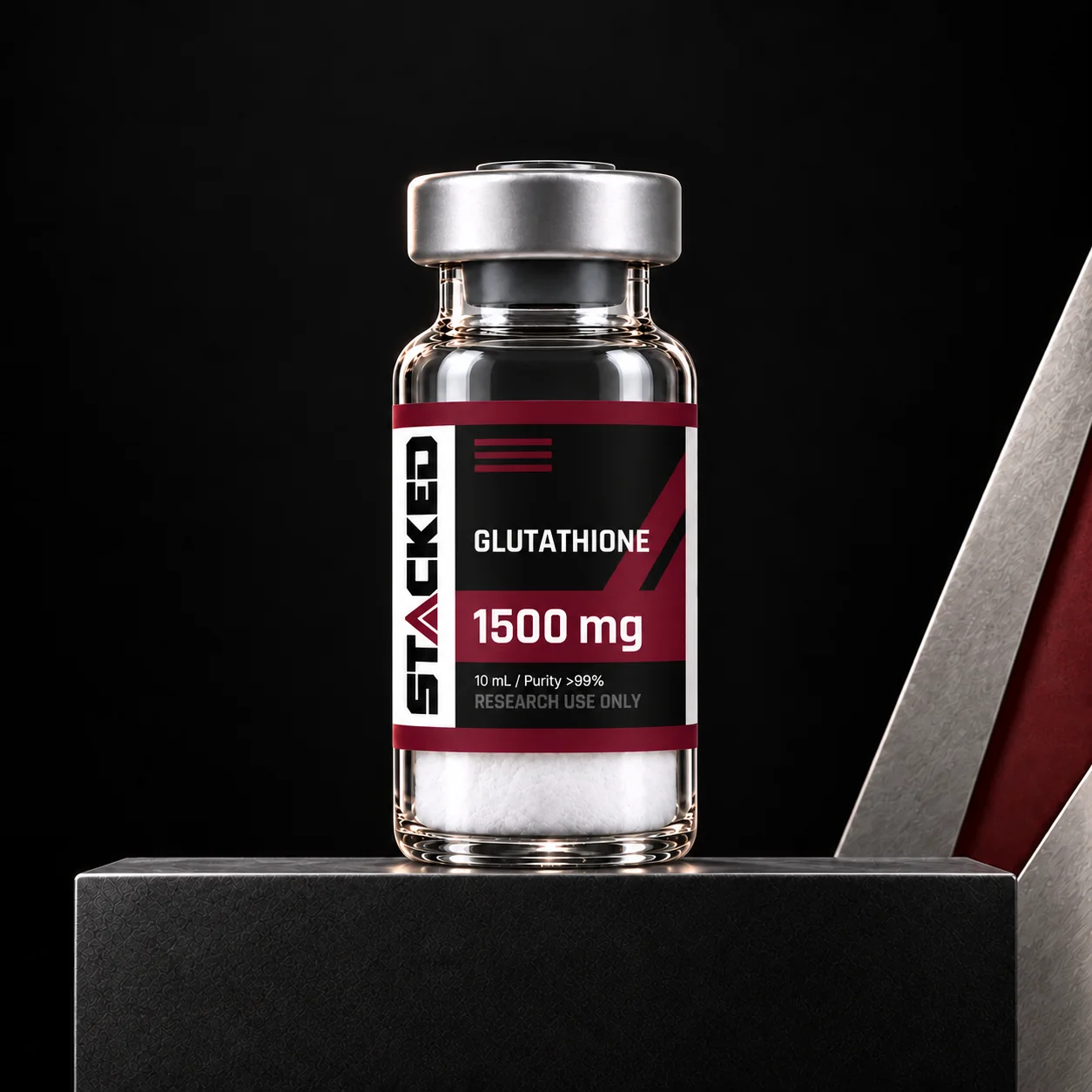
PRODUCT SPECIFICATIONS
- CAS #
- 70-18-8
- Molecular weight
- ≈307.3 g/mol
- Storage instructions
- Keep unopened dry material at −20 °C for long-term storage, protected from light and moisture, unless the supplied label specifies otherwise. After preparing a solution, follow the lot-specific instructions and your validated laboratory protocol.
Peptide Vials for Sale
Glutathione Vial (1500mg)
Reduced L-glutathione (GSH) is the tripeptide γ-Glu-Cys-Gly and the most abundant low-molecular-weight thiol in animal cells, central to antioxidant defence and redox-signaling research. Supplied as lyophilized powder in a 1500 mg vial, each lot with an HPLC certificate of analysis. CAS 70-18-8. For laboratory research use only.
Available
Certificate of analysisView available PDF reports
Product identification & intended use
SKU: SB-VIAL-Glutathione-1500MG
For laboratory research use only. Not for human or veterinary use.
Description
Glutathione Vial: Research-Grade Reduced L-Glutathione (GSH)
Glutathione is a tripeptide made of glutamate, cysteine and glycine, and the most abundant low-molecular-weight thiol in animal cells. In its reduced form (GSH) it is a central part of the cell’s antioxidant defence, detoxification pathways and redox signaling, which makes it one of the most widely studied molecules in oxidative-stress research.
Stacked BioLabs supplies glutathione as a lyophilized powder, 1500 mg per vial, with a lot-specific certificate of analysis.
Compound identity
Research background
Glutathione has an unusual structure: the glutamate is joined to cysteine through its side-chain (gamma) carboxyl group rather than the usual peptide bond, which protects it from most peptidases. It is made inside cells in two ATP-dependent steps, and its free thiol group on cysteine is what allows it to neutralize reactive oxygen species and other electrophiles.
When GSH donates electrons it becomes oxidized glutathione (GSSG), and the enzyme glutathione reductase converts it back using NADPH. The GSH/GSSG ratio is therefore a standard research marker of cellular redox state. Glutathione is also the co-substrate for glutathione peroxidases and glutathione S-transferases, enzymes that detoxify peroxides and conjugate drugs and toxins for removal.
Research uses range from cell-culture studies of oxidative stress and ferroptosis to liver, lung and aging models. Because thiols oxidize easily, prepared solutions should be used promptly. Related research compounds in the catalog include NAD+ and GHK-Cu.
Verifying your lot
Every vial carries a lot number. Match it to its certificate in the COA & lab reports library, which lists identity and purity results for that specific batch. A certificate applies only to the lot it names. If you can’t find a report for your lot, contact us and we’ll supply it. Keep the certificate in your lab records together with the product, strength and lot number, so every result can be traced back to the exact batch used.
A typical certificate reports purity by high-performance liquid chromatography (HPLC) and confirms identity by mass spectrometry (MS), comparing the measured molecular mass with the expected value for the compound. Check that the product name, strength and lot number on the certificate match the label before recording results.
Storage and handling
Lyophilized peptides are most stable when kept cold, dry and away from light; −20 °C is the standard for long-term storage of lyophilized material. Follow the storage instructions supplied with the material and your institution’s handling procedures. Reconstitution is usually done with sterile or bacteriostatic water, depending on your protocol. Before opening, let the vial reach room temperature to limit condensation, and use sterile technique when puncturing the stopper. Label each reconstituted vial with the date, diluent and concentration used, and keep it refrigerated and protected from light.
Frequently asked questions
What is the difference between GSH and GSSG?
GSH is reduced glutathione, the active antioxidant form. GSSG is two glutathione molecules joined by a disulfide bond after oxidation.
Why does glutathione use a gamma bond?
The γ-glutamyl linkage makes it resistant to most peptidases, helping it persist inside cells.
What strengths are available?
One size: 1500 mg per vial.
Is this product for human use?
No. This product is sold strictly for laboratory research use. It is not a drug, food, dietary supplement or cosmetic, and is not for human or veterinary use. See our RUO policy.
References
1. Forman HJ, Zhang H, Rinna A. Glutathione: overview of its protective roles, measurement, and biosynthesis. Mol Aspects Med. 2009. PubMed
2. Further reading: PubMed literature on glutathione · PubChem
