
PRODUCT SPECIFICATIONS
- CAS #
- 137525-51-0
- Molecular weight
- ≈1419.5 g/mol
- Storage instructions
- Keep the bottle capped and protected from light. Refrigerate unless the product label states otherwise; follow the supplied instructions after opening.
Peptide Sprays for Sale
BPC-157 Spray
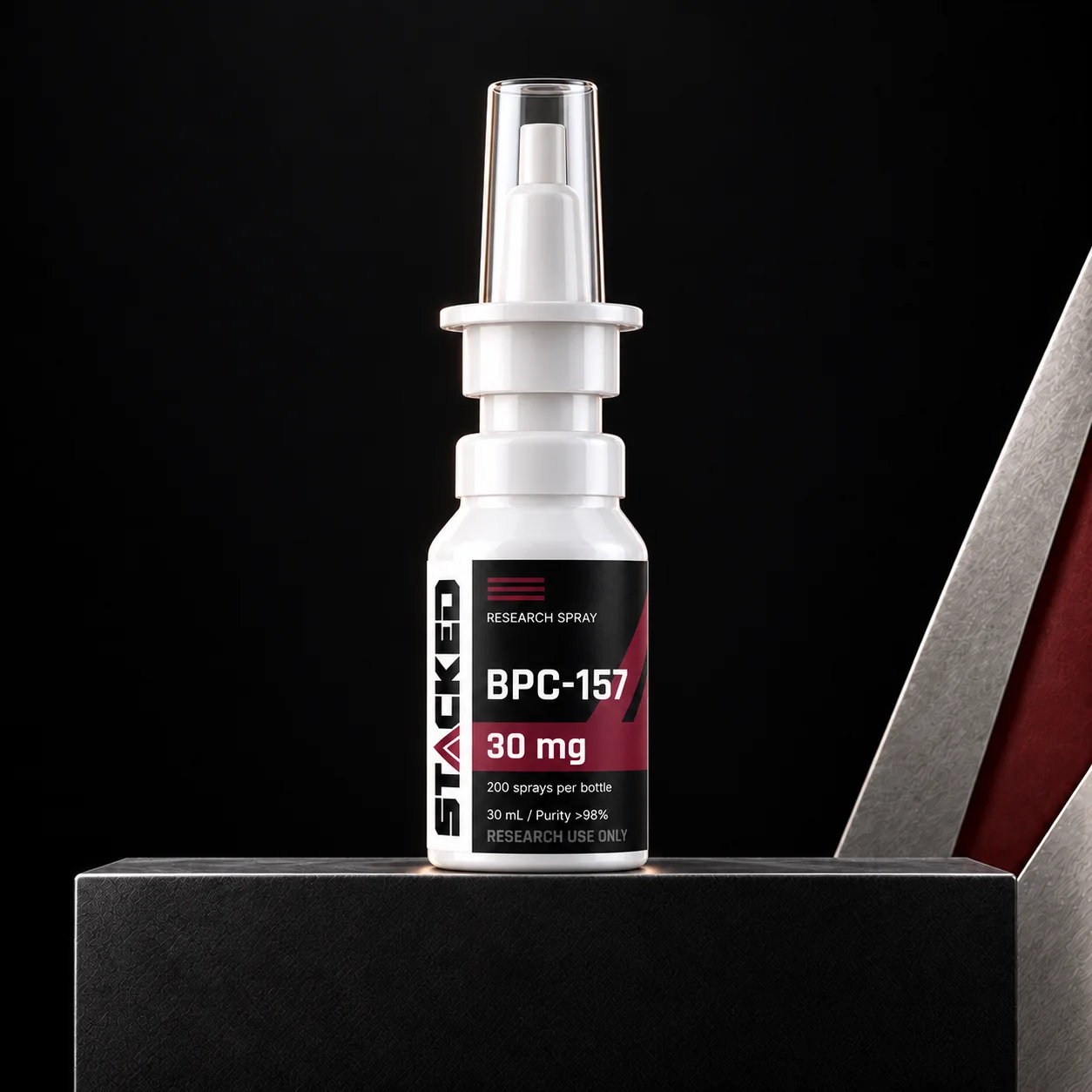
BPC-157 (Body Protection Compound 157), the 15-amino-acid gastric-derived research peptide, supplied as a ready-to-use liquid: 30 mg in a 30 mL spray bottle (1 mg/mL). No reconstitution step, and each lot comes with an HPLC certificate of analysis. CAS 137525-51-0. For laboratory research use only.
Available
Certificate of analysisView available PDF reports
Product identification & intended use
SKU: SB-SPRY-BPC157-30MG
For laboratory research use only. Not for human or veterinary use.
Description
BPC-157 Spray: Ready-to-Use Liquid Research Format
This listing supplies BPC-157, the 15-amino-acid Body Protection Compound peptide, as a ready-made liquid in a 30 mL spray bottle. A liquid format removes the reconstitution step needed for lyophilized vials, which is useful for research designs that call for a solution at a known, fixed concentration.
Each 30 mL bottle contains 30 mg BPC-157 (a labeled concentration of 1 mg/mL), with a lot-specific certificate of analysis.
Compound identity
Research background
BPC-157 was derived from a protein in human gastric juice and is reported to be unusually stable compared with most peptides, which is one reason it is available in several formats. The bulk of its research literature, led by Predrag Sikiric’s group at the University of Zagreb, examines it in rodent models of gastrointestinal lesions, tendon and ligament injury, muscle damage and the gut-brain axis.
Proposed mechanisms include support for angiogenesis, interaction with the nitric-oxide system and increased expression of growth-factor receptors such as VEGFR2 in fibroblasts. Almost all of this evidence is preclinical. For format-comparison work, record the product, lot and concentration used in each experiment, since liquids, lyophilized powders and capsules are not interchangeable without accounting for concentration and stability.
BPC-157 is also available as lyophilized vials and capsules, and in a BPC-157 + TB-500 blend spray.
Verifying your lot
Every bottle carries a lot number. Match it to its certificate in the COA & lab reports library, which lists identity and purity results for that specific batch. A certificate applies only to the lot it names. If you can’t find a report for your lot, contact us and we’ll supply it. Keep the certificate in your lab records together with the product, strength and lot number, so every result can be traced back to the exact batch used.
A typical certificate reports purity by high-performance liquid chromatography (HPLC) and confirms identity by mass spectrometry (MS), comparing the measured molecular mass with the expected value for the compound. Check that the product name, strength and lot number on the certificate match the label before recording results.
Storage and handling
Keep the bottle capped and protected from light, and refrigerate it unless the label states otherwise. Record the lot number and the date the bottle is first opened, and follow the storage instructions supplied with the material and your institution’s handling procedures. Do not transfer the solution into unlabeled containers; keep it in the original bottle so the lot number and labeled concentration stay with the material.
Frequently asked questions
What concentration is the spray?
30 mg BPC-157 in 30 mL, a labeled concentration of 1 mg/mL.
Why choose a liquid format?
It arrives in solution at a fixed concentration, so no reconstitution is needed.
What does each bottle contain?
One size: 30 mL bottle containing 30 mg BPC-157.
Is this product for human use?
No. This product is sold strictly for laboratory research use. It is not a drug, food, dietary supplement or cosmetic, and is not for human or veterinary use. See our RUO policy.
References
1. Seiwerth S, et al. BPC 157 and standard angiogenic growth factors. Gastrointestinal tract healing, lessons from tendon, ligament, muscle and bone healing. Curr Pharm Des. 2018. PubMed
2. Further reading: PubMed literature on BPC-157 · PubChem
