
PRODUCT SPECIFICATIONS
- CAS #
- 42464-96-0 (iodide salt)
- Molecular weight
- 159.2 g/mol (cation only; excludes counterion)
- Storage instructions
- Keep the original bottle tightly closed in a cool, dry place, protected from light and moisture. Follow any additional storage instructions on the label.
Peptide Capsules for Sale
5-Amino-1MQ Capsules
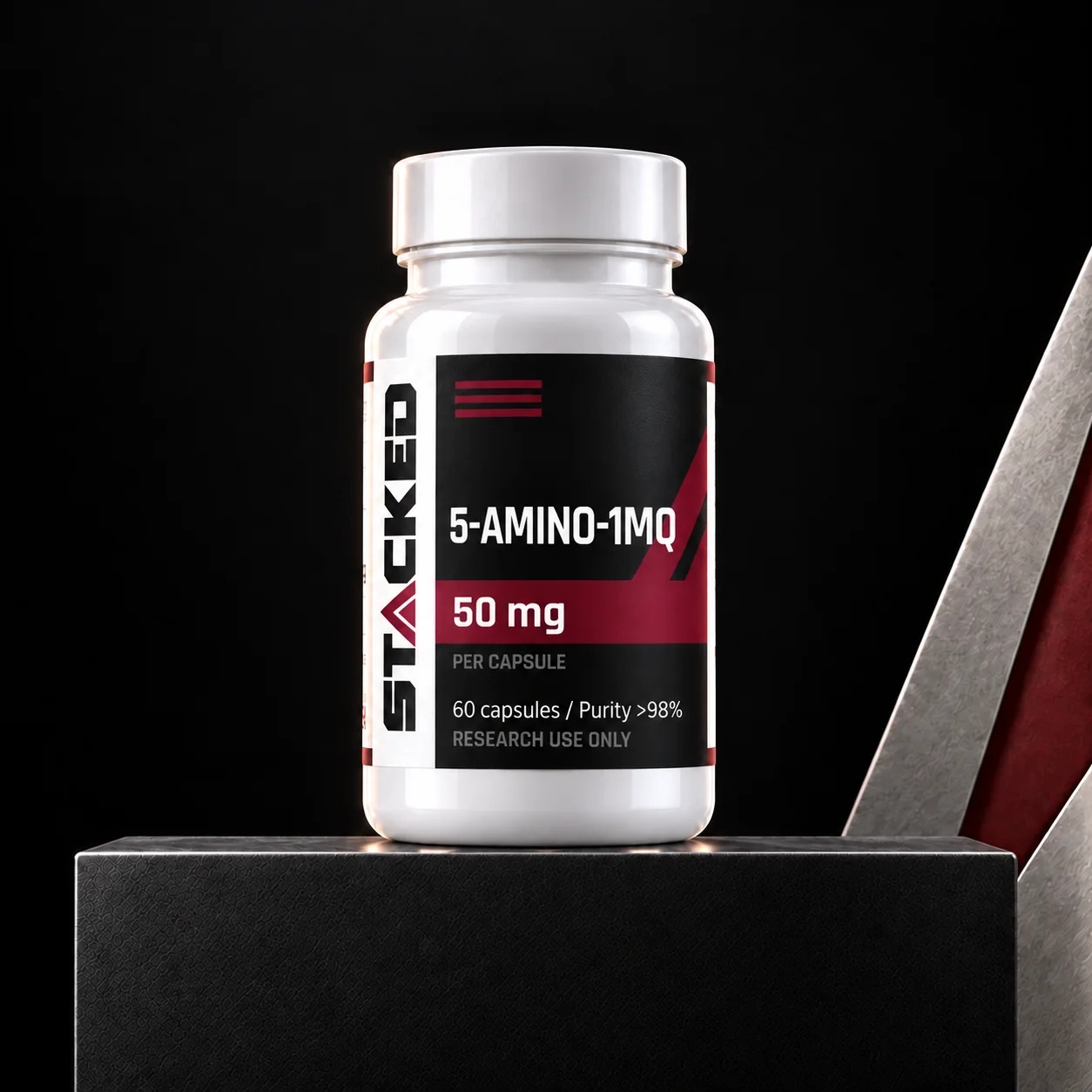
5-Amino-1MQ (5-amino-1-methylquinolinium) is a small-molecule NNMT inhibitor — not a peptide — used to study NAD+ metabolism, methylation and energy balance in fat cells. 60 capsules of 50 mg per bottle, each lot with an HPLC certificate of analysis. CAS 42464-96-0 (iodide salt). For laboratory research use only.
Available
Certificate of analysisView available PDF reports
5 Amino 1 MQ 50mg
Product identification & intended use
SKU: SB-CAPS-5Amino1MQ-50MG
For laboratory research use only. Not for human or veterinary use.
Description
5-Amino-1MQ Capsules: Capsule-Format NNMT Inhibitor for Metabolic Research
5-Amino-1MQ is a small-molecule inhibitor of nicotinamide N-methyltransferase (NNMT), an enzyme concentrated in fat tissue that links nicotinamide, NAD+ recycling and the cell’s methyl-donor supply. This listing supplies it in pre-measured capsules for research designs that call for a capsule format.
Each bottle contains 60 capsules at 50 mg per capsule, with a lot-specific certificate of analysis.
Compound identity
Research background
As a small, charged quinolinium compound, 5-Amino-1MQ was selected from a series of NNMT inhibitors for its ability to enter cells. Its developers at the University of Texas Medical Branch reported that it raised intracellular NAD+ and S-adenosylmethionine in fat cells and suppressed lipogenesis, and that in mice on a high-fat diet it reduced body weight, fat-cell size and plasma cholesterol without reducing food intake.
Those findings put NNMT at the intersection of two research themes: NAD+ availability, which is central to sirtuin and mitochondrial research, and methylation capacity, which affects gene regulation. Later work has examined NNMT in muscle stem cells and aging muscle, where inhibiting the enzyme was associated with improved regenerative capacity in older mice.
Capsules suit studies that compare the capsule format with other formats or need consistent pre-measured amounts. The same compound is available in vials, and it is often researched alongside NAD+, SLU-PP-332 and BAM-15.
Verifying your lot
Every bottle carries a lot number. Match it to its certificate in the COA & lab reports library, which lists identity and purity results for that specific batch. A certificate applies only to the lot it names. If you can’t find a report for your lot, contact us and we’ll supply it. Keep the certificate in your lab records together with the product, strength and lot number, so every result can be traced back to the exact batch used.
A typical certificate reports purity by high-performance liquid chromatography (HPLC) and confirms identity by mass spectrometry (MS), comparing the measured molecular mass with the expected value for the compound. Check that the product name, strength and lot number on the certificate match the label before recording results.
Storage and handling
Keep the bottle tightly closed in a cool, dry place, away from light and moisture, and follow the storage instructions on the label. Record the lot number and the date the bottle is first opened so every use can be traced in your laboratory records. Do not transfer capsules into unlabeled containers, and keep the original bottle and its label with the material until the lot is used up or retired from your study.
Frequently asked questions
Is the capsule compound the same as the vial?
Yes. Both contain 5-Amino-1MQ; only the format and labeled quantity differ.
How does NNMT inhibition relate to NAD+?
NNMT consumes nicotinamide, the main NAD+ recycling precursor. Blocking it can leave more nicotinamide for NAD+ synthesis.
What does each bottle contain?
60 capsules per bottle, 50 mg 5-Amino-1MQ per capsule.
Is this product for human use?
No. This product is sold strictly for laboratory research use. It is not a drug, food, dietary supplement or cosmetic, and is not for human or veterinary use. See our RUO policy.
References
1. Neelakantan H, et al. Selective and membrane-permeable small molecule inhibitors of nicotinamide N-methyltransferase reverse high fat diet-induced obesity in mice. Biochem Pharmacol. 2018. PubMed
2. Further reading: PubMed literature on 5-Amino-1MQ and NNMT
