
PRODUCT SPECIFICATIONS
- CAS #
- 1627580-64-6
- Molecular weight
- ≈2174.6 g/mol
- Storage instructions
- Keep unopened dry material at −20 °C for long-term storage, protected from light and moisture, unless the supplied label specifies otherwise. After preparing a solution, follow the lot-specific instructions and your validated laboratory protocol.
Peptide Vials for Sale
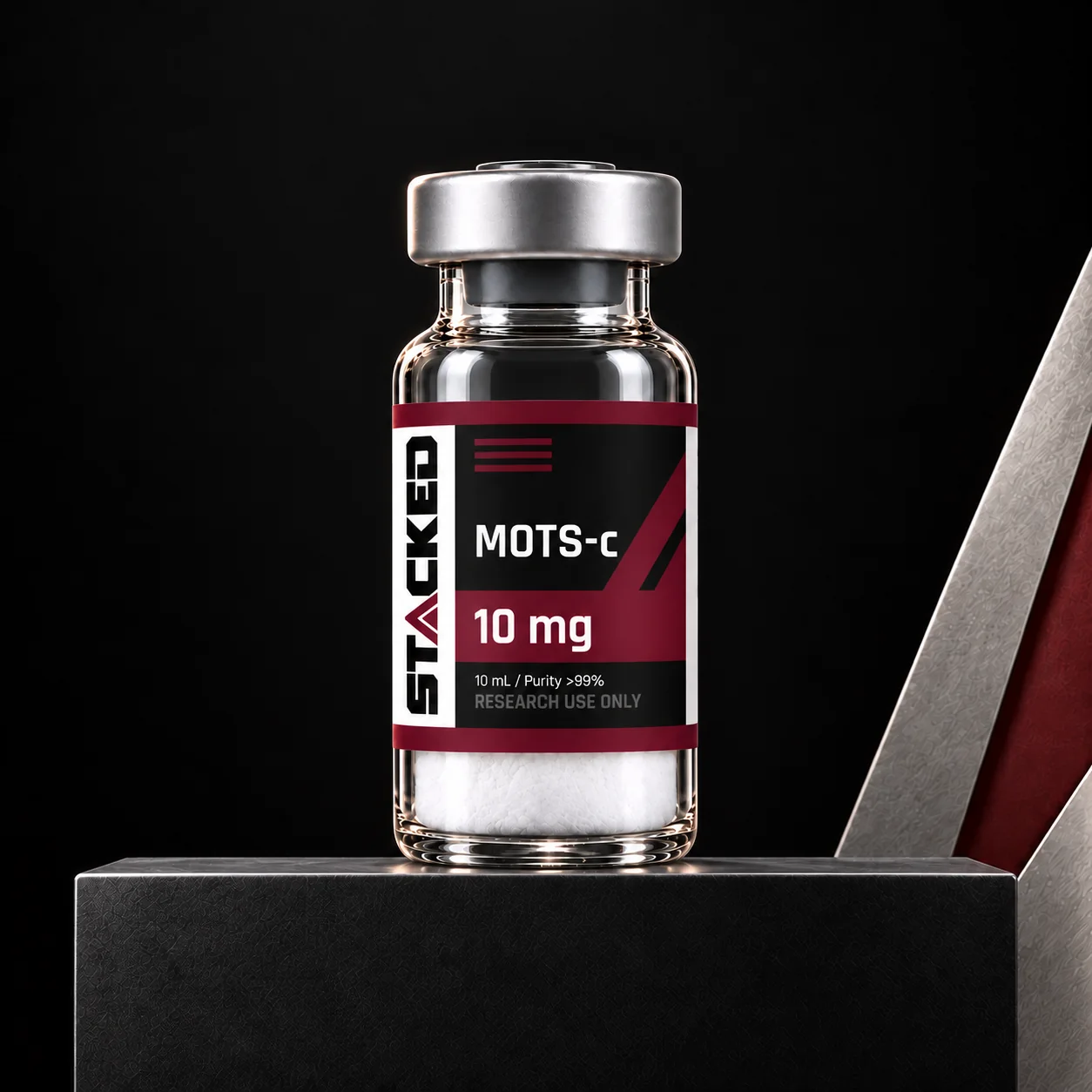
MOTS-c Peptide Vial
MOTS-c is a 16-amino-acid peptide encoded in mitochondrial DNA (the 12S rRNA region), studied in research on metabolism, insulin sensitivity and exercise biology. Supplied as lyophilized powder in 10 mg and 40 mg vials, each lot with an HPLC certificate of analysis. CAS 1627580-64-6. For laboratory research use only.
Certificate of analysisView available PDF reports
Product identification & intended use
SKU: STK-VIA-00082
For laboratory research use only. Not for human or veterinary use.
Description
MOTS-c Vial: Research-Grade Mitochondrial-Derived Peptide
MOTS-c is a 16-amino-acid peptide encoded not in the cell nucleus but in mitochondrial DNA, within the gene for the 12S ribosomal RNA. Its discovery in 2015 helped establish “mitochondrial-derived peptides” as a class of signaling molecules, and it is now widely studied in metabolism, exercise and aging research.
Stacked BioLabs supplies MOTS-c as a lyophilized powder in 10 mg and 40 mg vials, each with a lot-specific certificate of analysis.
Compound identity
Research background
The original study, from the Cohen laboratory at the University of Southern California, reported that MOTS-c acts mainly in skeletal muscle, where it inhibits the folate cycle and de novo purine synthesis. That leads to accumulation of AICAR and activation of AMPK, a central regulator of cellular energy balance. In mice fed a high-fat diet, the peptide was associated with reduced weight gain and improved insulin sensitivity.
Later work found that, under metabolic stress, MOTS-c can move from the cytoplasm into the nucleus and influence the expression of stress-response and antioxidant genes, an unusual example of a mitochondrial product signaling directly to the nuclear genome. Other studies measured circulating MOTS-c levels in relation to age and exercise, and examined it in models of physical capacity in older animals.
These findings make MOTS-c a common subject in research on how mitochondria communicate with the rest of the cell. Related metabolic research compounds in the catalog include SLU-PP-332, 5-Amino-1MQ and NAD+.
Verifying your lot
Every vial carries a lot number. Match it to its certificate in the COA & lab reports library, which lists identity and purity results for that specific batch. A certificate applies only to the lot it names. If you can’t find a report for your lot, contact us and we’ll supply it. Keep the certificate in your lab records together with the product, strength and lot number, so every result can be traced back to the exact batch used.
A typical certificate reports purity by high-performance liquid chromatography (HPLC) and confirms identity by mass spectrometry (MS), comparing the measured molecular mass with the expected value for the compound. Check that the product name, strength and lot number on the certificate match the label before recording results.
Storage and handling
Lyophilized peptides are most stable when kept cold, dry and away from light; −20 °C is the standard for long-term storage of lyophilized material. Follow the storage instructions supplied with the material and your institution’s handling procedures. Reconstitution is usually done with sterile or bacteriostatic water, depending on your protocol. Before opening, let the vial reach room temperature to limit condensation, and use sterile technique when puncturing the stopper. Label each reconstituted vial with the date, diluent and concentration used, and keep it refrigerated and protected from light.
Frequently asked questions
Why is MOTS-c called mitochondrial-derived?
Its sequence is encoded in mitochondrial DNA, within the 12S rRNA gene, rather than in the nuclear genome.
What pathway is MOTS-c best known for?
Its published research centres on the folate cycle and activation of AMPK, particularly in skeletal muscle.
What strengths are available?
10 mg and 40 mg per vial. Choose a strength above to see its price and availability.
Is this product for human use?
No. This product is sold strictly for laboratory research use. It is not a drug, food, dietary supplement or cosmetic, and is not for human or veterinary use. See our RUO policy.
References
1. Lee C, et al. The mitochondrial-derived peptide MOTS-c promotes metabolic homeostasis and reduces obesity and insulin resistance. Cell Metab. 2015. PubMed
2. Further reading: PubMed literature on MOTS-c · PubChem
